Article Summary:
- Big data analytics allows users to handle large datasets that traditional data and analytics tools can’t handle due to the large scale of the data.
- Companies that report using advanced analytics realize 23% higher profit margins than industry competitors using traditional business intelligence.
- There are three types of analytics, which can be used for different purposes: descriptive analytics, predictive analytics, and prescriptive analytics.
- Utilizing cloud-based platforms to reduce infrastructure costs by 40-60%, while realizing the high levels of compute power that big data processing requires.
- Most enterprises mentioned data quality, whether real-time or portability of data across the organization, as their greatest obstacle to success with analytics.
Traditional analytics tools break down when you try to process this volume, variety, and velocity of information. Big data analytics evolved to handle datasets that exceed the capacity of standard database platforms.
This guide explains how big data analytics differs from traditional methods, which architecture setups suit various needs, and how businesses can create analytics that truly drive results.
What Qualifies as Big Data (and What Doesn’t)
The term “big” in big data analytics refers to more than size. There are five main characteristics which define whether your data challenges require specialized approaches.
| Data Characteristic | Traditional Analytics | Big Data Analytics | Business Impact |
| Volume | Up to 1TB | Terabytes to petabytes | Storage and compute costs |
| Velocity | Batch processing (hours/days) | Real-time to near real-time | Response time to events |
| Variety | Structured data only | All formats (structured, semi-structured, unstructured) | Types of insights available |
| Processing | Single-server databases | Distributed computing clusters | Scale and performance |
| Cost per TB | $1,000-$2,000/month | $23-$100/month | Total infrastructure spend |
Organizations that try to force big data workloads into traditional analytics platforms face performance issues, cost overruns, and project failures. Understanding whether your challenges truly require big data approaches saves both money and complexity.
The Three Types of Analytics That Big Data Enables
Data analytics serves different purposes across the analytics maturity spectrum. Most enterprises use all three types for different business problems.
- Descriptive analytics answers “what happened.” Sales dashboards, financial reports, and operational metrics fall into this category. This represents the baseline that every organization needs.
- Predictive analytics tackles “what might happen.” Customer churn models, demand forecasts, and risk assessments use historical patterns to project future outcomes. Machine learning algorithms power most predictive applications.
- Prescriptive analytics determines “what to do about it.” Recommendation engines, route optimization systems, and dynamic pricing platforms suggest specific actions. This requires the most sophisticated technical capabilities and delivers the highest business value.
| Analytics Type | Question Answered | Common Use Cases | Technical Complexity | Business Value |
| Descriptive | What happened? | Dashboards, reports, KPIs | Low | Baseline |
| Diagnostic | Why did it happen? | Root cause analysis, anomaly detection | Medium | Moderate |
| Predictive | What will happen? | Forecasts, churn models, risk scores | High | Significant |
| Prescriptive | What should we do? | Recommendations, optimization, automation | Very High | Highest |
For deeper context on how predictive models differ from traditional reporting, understanding what is data analytics provides a useful foundation.
Big Data Architecture: Lakes, Warehouses, and Hybrid Models
The platform you choose for big data analytics shapes what’s possible, what it costs, and how fast your teams can work.
Data warehouses excel at structured information with predefined schemas. They optimize query performance automatically and provide built-in governance. But they struggle with unstructured data and cost significantly more per terabyte.
Data lakes accept any data type without requiring structure upfront. Raw logs, JSON feeds, images, and sensor streams land in native format. This flexibility costs less for storage but pushes complexity to query time.
Hybrid architectures combine both approaches. Structured data for reporting lives in warehouses. Unstructured data for exploratory analytics and machine learning sits in lakes.
From a data architecture perspective, the choice depends on your specific analytics requirements and existing technical capabilities. Organizations with mature data teams tend toward lakes.
- Cloud vs. On-Premise Infrastructure
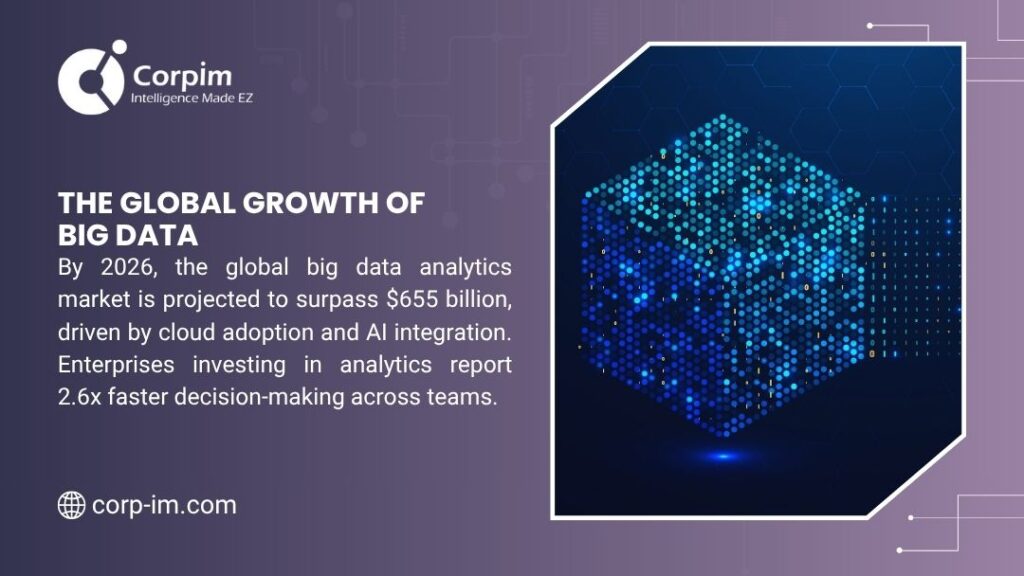
Cloud platforms changed the economics of big data analytics. Scaling compute power to process terabytes of data used to require massive capital investments in hardware.
Cloud services let you spin up the resources you need, run your analysis, and shut everything down.
| Infrastructure Model | Upfront Cost | Scalability | Typical Annual Cost (10TB) | Best For |
| On-premise cluster | $500K-$2M | Limited by hardware | $200K-$400K | Highly sensitive data, strict compliance |
| Public cloud (AWS, Azure, GCP) | $0 | Unlimited | $50K-$150K | Most organizations |
| Hybrid cloud | $100K-$500K | Flexible | $100K-$250K | Mix of sensitive and standard workloads |
| Private cloud | $300K-$1M | Moderate | $150K-$300K | Regulated industries |
Organizations that moved to cloud-based data analytics report infrastructure cost reductions of 40-60% compared to on-premise deployments. But cloud introduces new challenges around data transfer costs, security configurations, and vendor dependencies.
Data Integration: The Challenge Nobody Talks About
Big data analytics projects fail more often from data integration problems than from technical architecture issues. Getting data from source systems into analytics platforms cleanly and consistently creates the bottlenecks that delay projects.
Enterprise data lives in dozens of places. CRM systems hold customer information. ERP platforms track orders and inventory. Marketing tools capture campaign performance. Each system uses different formats, update schedules, and quality standards.
Building pipelines that extract, transform, and load this data reliably requires more effort than most organizations anticipate. A simple customer analysis might need data from five systems that don’t share common identifiers.
Common integration challenges:
- Schema conflicts: Different systems define the same fields differently
- Timing mismatches: Systems update on different schedules
- Data quality gaps: Source systems have different validation rules
- API limitations: Some systems restrict how fast you can pull data
- Network constraints: Moving terabytes across networks takes time
In my experience with enterprise cloud modernization projects, teams that underestimate integration complexity spend 60% more time in the implementation phase than those who plan for it upfront.
For organizations weighing different analytical approaches, the distinction between data analytics vs data science becomes relevant when deciding which skills and tools your integration work requires.
AI and Machine Learning in Big Data Processing
Artificial intelligence transforms how enterprises extract value from massive datasets. Traditional analytics requires humans to decide which questions to ask.
Machine learning models identify customer segments that standard demographic analysis misses. Anomaly detection spots equipment failures before they happen. Natural language processing extracts insights from unstructured text that would take humans months to read.
AI models need huge amounts of data to train effectively. A fraud detection system might require millions of historical transactions. A recommendation engine needs extensive user behavior data.
Big data analytics platforms provide the foundation that makes these AI applications possible.
| AI/ML Application | Data Requirements | Business Value | Implementation Complexity |
| Fraud detection | Millions of transactions | Reduce losses 40-60% | High |
| Demand forecasting | 2+ years historical data | Inventory optimization 20-30% | Medium |
| Customer segmentation | Full customer database | Targeted marketing lift 15-25% | Medium |
| Predictive maintenance | Sensor data over time | Downtime reduction 30-50% | High |
| Recommendation engines | User behavior across touchpoints | Revenue lift 10-30% | Very High |
Organizations report that AI applications built on big data solutions deliver 3-5x higher ROI than traditional business intelligence investments.
But they also require specialized skills that many IT teams don’t have in-house.
Data Governance and Quality Control at Scale
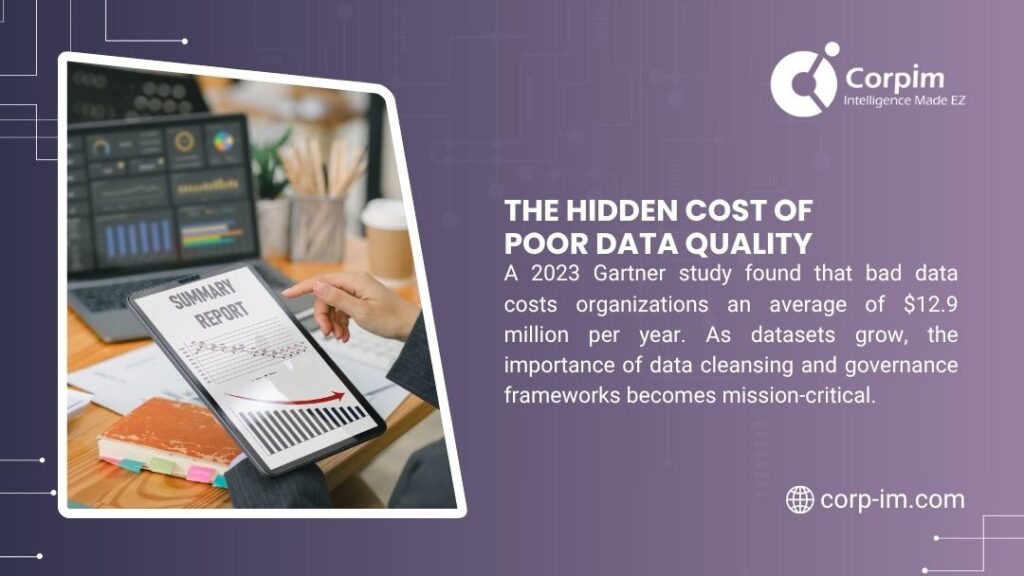
The more data you collect, the harder it becomes to maintain quality and comply with regulations.
A database with 1,000 customer records is easy to audit. A data lake with 50 terabytes of customer interactions across a decade presents different challenges.
Data governance frameworks define who can access what data, how long to retain it, and which regulations apply. Without governance, your big data analytics platform turns into an unmanageable data swamp where nobody trusts the information.
Key governance components:
- Access controls that limit who sees sensitive data
- Retention policies that delete data when legally required
- Audit logs that track who accessed what information
- Quality metrics that measure completeness and accuracy
- Lineage tracking that shows where data came from
Healthcare, financial services, and insurance organizations have regulatory burdens that are increasingly demanding compared to other industries.
For example, HIPAA, SOX, and state insurance requirements require a framework of various controls that you must build into the analytics assets (and not just a set of things you can add later).
The difference between business intelligence vs data analytics can be seen most clearly through the lens of governance requirements.
Traditional BI tools usually have controls built-in while big data platforms expect you to build into the application governance requirements separately.
Building a Big Data Strategy That Delivers ROI
Technology choices matter less than the business problems you solve. The most sophisticated big data architecture delivers zero value if it doesn’t answer questions that affect revenue, costs, or risk.
Start with specific use cases, not platforms. Which business decisions currently happen without adequate data? Where do executives make choices based on intuition because analysis takes too long? These gaps represent opportunities where analytics can deliver measurable impact.
Big data strategy development follows a predictable pattern:
- Identify high-value business problems where better data would change decisions
- Assess current data availability and quality for those use cases
- Calculate potential business impact in financial terms
- Design minimum viable analytics that prove value quickly
- Build infrastructure to support proven use cases
- Expand gradually based on results, not technology trends
Organizations that follow this approach report 65% higher success rates than those that start with technology selection and look for use cases later.
The timeline varies by company size and complexity. Small implementations delivering a single use case take 3-6 months. Enterprise-wide analytics platforms require 12-18 months for initial deployment.
Cost Considerations and Budget Planning
Big data analytics projects cost more than standard BI implementations. But they also deliver different values. Budget planning requires understanding both sides of the equation.
Infrastructure costs break down into storage, compute, and tooling:
| Cost Component | Traditional BI | Big Data Analytics | Key Drivers |
| Storage | $1,000-$2,000 per TB/month | $23-$100 per TB/month | Volume of historical data |
| Compute | Included in database license | $50-$500 per query | Query complexity and frequency |
| Data integration | ETL tools $50K-$200K/year | Modern pipelines $100K-$400K/year | Number of data sources |
| Governance tools | Built into BI platform | Separate catalog $50K-$300K/year | Compliance requirements |
| Analytics software | $100K-$500K/year | $200K-$1M+/year | User count and features |
A mid-size company processing 10-20TB of data annually might budget $300K-$600K for infrastructure and tooling. Enterprise deployments at 100TB+ scale typically run $1M-$3M annually.
The ROI calculation depends on the business problems you solve. A manufacturer that reduces equipment downtime by 30% through predictive maintenance might save $5M annually on a $500K analytics investment.
An e-commerce company that lifts conversion rates by 2% through better recommendations generates returns that dwarf platform costs.
Implementation Roadmap and Timeline Expectations
Organizations succeed with big data analytics when they start small and expand based on results. The biggest failures come from trying to build enterprise-wide platforms before proving value.
A practical implementation path follows these phases:
Months 1-2: Discovery and planning
- Document high-value use cases
- Assess data availability and quality
- Calculate potential business impact
- Select initial pilot use case
Months 3-4: Proof of concept
- Build minimum viable analytics for one use case
- Validate technical approach
- Measure actual business impact
- Get executive buy-in for expansion
Months 5-8: Core platform development
- Deploy production infrastructure
- Build data integration pipelines
- Implement governance controls
- Train initial user teams
Months 9-12: Expansion and optimization
- Add additional use cases
- Refine data quality processes
- Scale infrastructure as needed
- Measure ROI and adjust priorities
Organizations that follow this graduated approach report 70% success rates. Those that try to build everything upfront before proving value see 65% failure rates.
Turn Your Data Into Strategic Advantage With Expert Big Data Implementation
If your organization needs to implement big data analytics capabilities without the risks that derail typical enterprise projects, Corporate InfoManagement provides the architecture expertise and cloud solutions you need – built for performance, scalability, and measurable ROI.
Corpim’s Centers of Excellence handle the complexities of modern data platforms. Our team develops solutions that balance technical sophistication with practical operational needs.
Partner with Corpim today and build analytics capabilities that deliver business value without the complexity that overwhelms internal teams.

Frequently Asked Questions About Big Data Analytics
How do you know when data is big enough to need special analytics tools?
Data becomes big when it’s too large, fast, or complex for traditional databases to manage. It is usually measured by volume, velocity, and variety.
How long does it take to implement big data analytics capabilities?
Most projects take 6–12 months. Pilot programs can show results in 3–6 months before full deployment.
What’s the difference between big data analytics and regular business intelligence?
Business intelligence focuses on reporting structured data. Big data analytics handles massive, varied datasets and often uses machine learning to uncover new insights.
Do we need to move everything to the cloud for big data analytics?
You don’t always need to move big data analytics to the cloud. The cloud is cheaper and easier to scale, but regulated industries may prefer hybrid or private setups.
What skills do we need on our team to succeed with big data analytics?
To succeed with data analytics, you will need data engineers, scientists, architects, and analysts or external partners until your team builds those skills.